How to Choose the Right Quilting Design for Your Quilt
One of the questions I get when I'm quilting a quilt is, "What quilting design should I use?"
And honestly, there are so many choices that it can sometimes be a little overwhelming.
There are pantographs with flowers, feathers, swirls, stars, trees, loops and all kinds of different designs. Some are very dense and some are very loose. Some quilting designs are meant to stand out, while others are really meant to stay in the background.
So how do you decide what is right for your quilt?
For me, I always want to look at the quilt itself first.
Look at the Piecing
The first thing I consider is the piecing.
What does the quilt look like? Is it very busy? Does it have lots of small pieces? Are there strong geometric shapes? Is there already a lot going on in the fabrics?
Sometimes the quilting needs to be the main feature, and sometimes it really needs to be secondary.
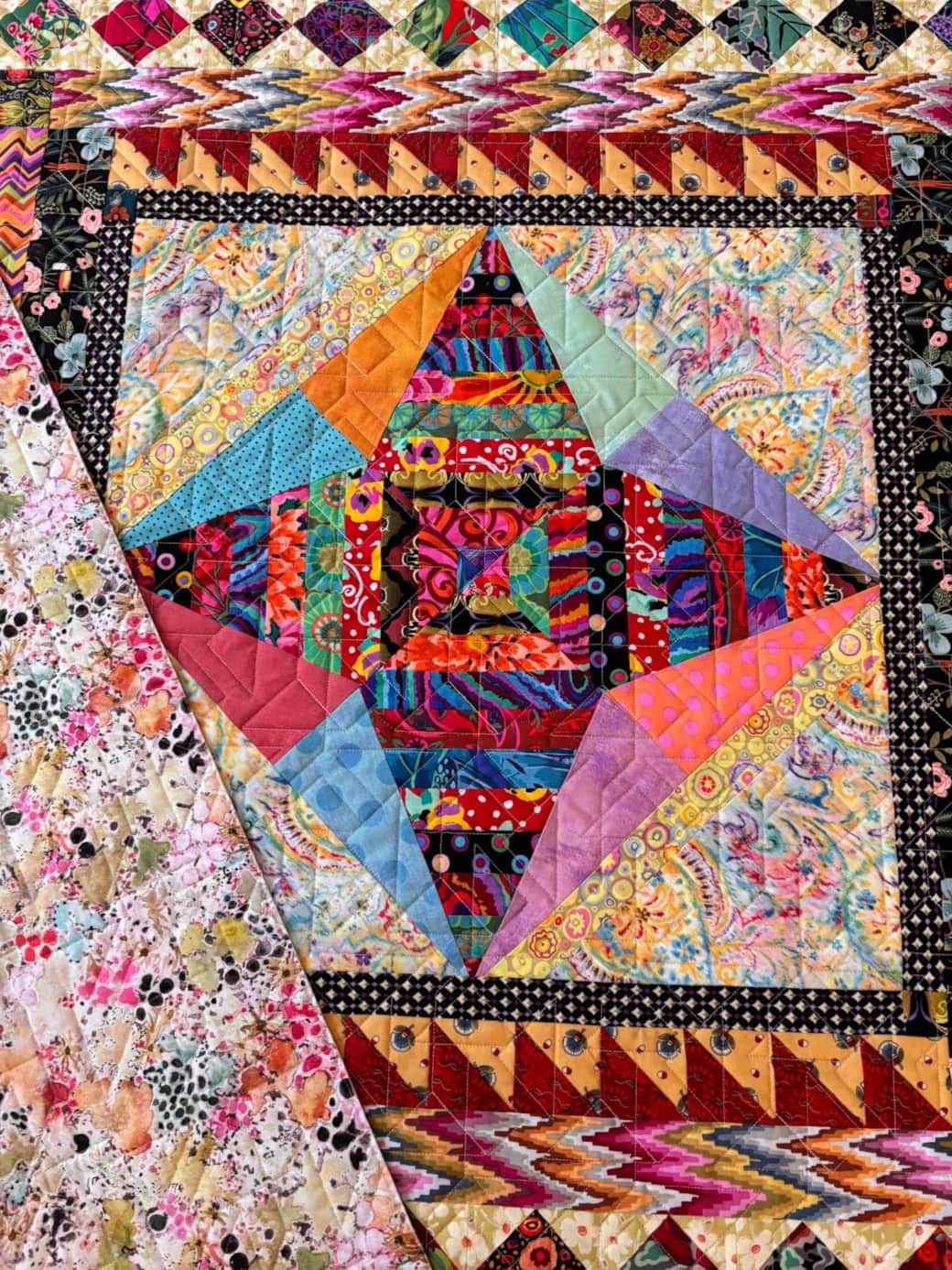
I recently quilted a beautiful quilt with lots of intense piecing and vibrant colors. There was so much going on in the quilt that I didn't want the quilting to compete with it.
Instead, I chose a quilting design that pulled from some of the shapes that were already in the quilt.
The quilting was there, but it was secondary. You really had to get up close to see it.
And I think that was exactly what that quilt needed.
Don't Be Afraid to Let the Quilting Stay in the Background
Sometimes we think that because we're paying for beautiful quilting, we need to be able to see every bit of it from across the room.
That's not necessarily true.
There are quilts where I want the quilting to really stand out. But there are other quilts where the piecing is so beautiful that I don't want to distract from it.
For a quilt with lots of bright colors and intense piecing, I may choose a thread color that blends into the quilt rather than one that contrasts with it.
Cream, white or another color that blends with the fabrics can allow the quilting to add texture without taking over the design.
That doesn't mean the quilting isn't there.
It just means the quilting is doing its job quietly.
Think About the Style of the Quilt
Another thing I like to consider is the style of the quilt.
If your quilt has a lot of sharp angles, flying geese or geometric shapes, you might want a quilting design that picks up some of those same ideas.
That's what I did on one of the quilts I recently worked on. It had lots of angles and flying geese units, so I chose a pantograph with triangles that echoed some of those shapes.
It wasn't an exact match, but it worked with the piecing.
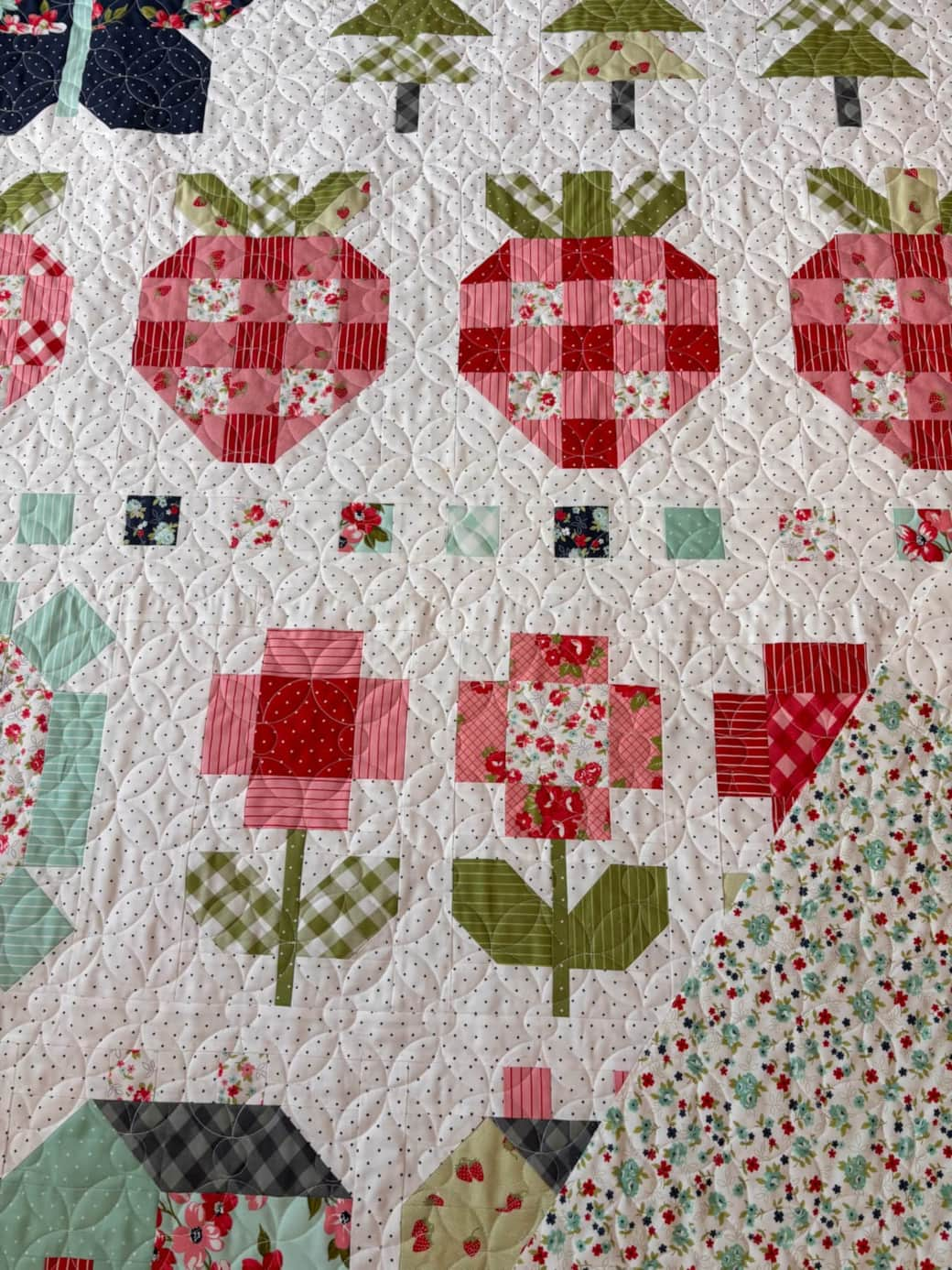
On another quilt, I used a design called Tree Doodles. It had large looping trees with stars, and it was such a cute addition to a Christmas quilt.
The design was loose enough that it didn't overpower all of the little pieces in the quilt.
So you don't necessarily need to match the quilting design exactly to something in the quilt. Sometimes you just want it to feel like it belongs there.
Consider How Dense You Want the Quilting
The density of the quilting makes a big difference, too.
Some quilters love very dense quilting. Others prefer a more open design.
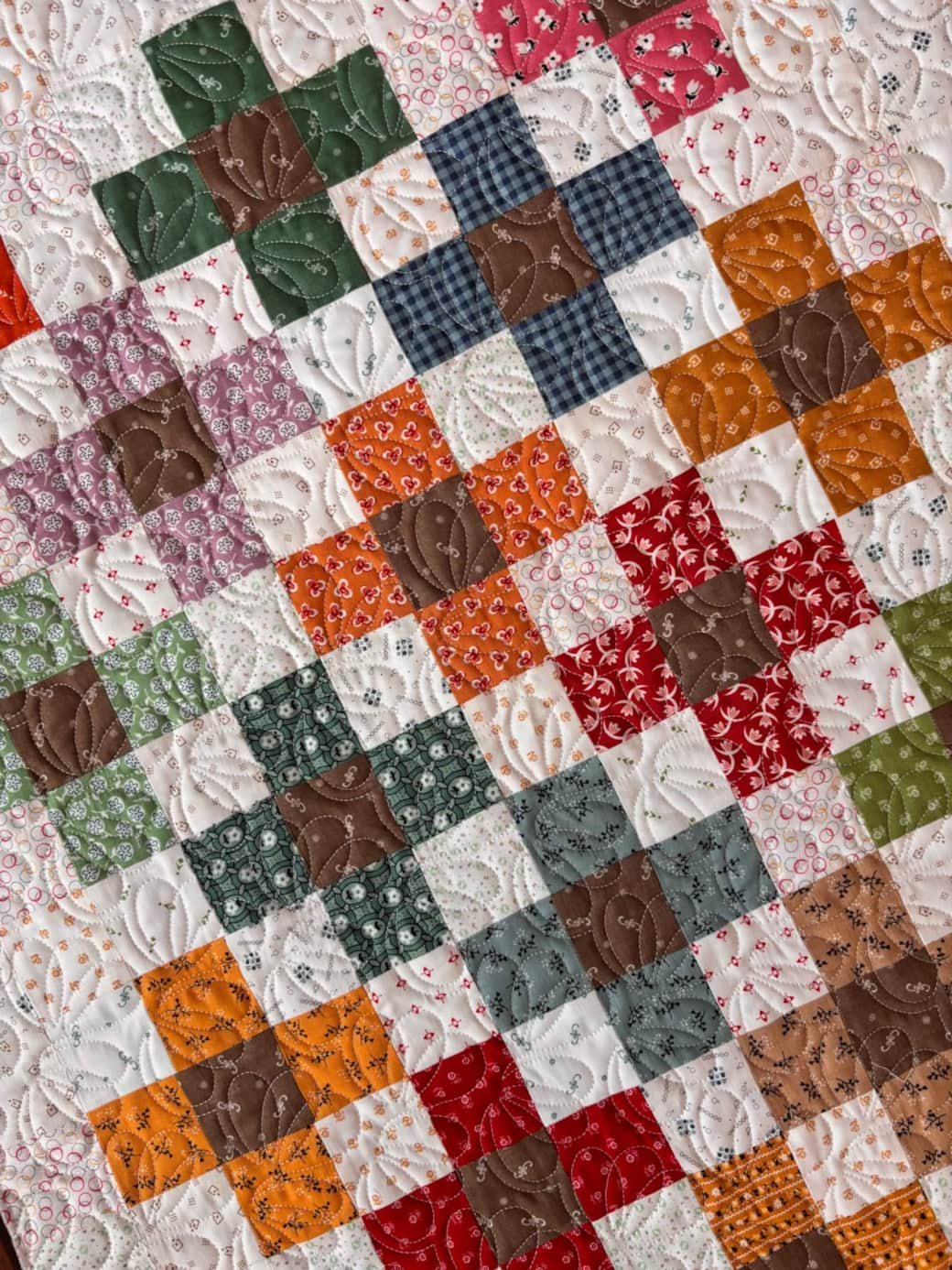
When I'm looking at a quilt that has a lot of piecing, I don't necessarily want to put a very dense pantograph over the top of it.
If the quilting is too dense, it can make it harder to see all the work that went into the piecing.
One of the quilts I worked on had a lot of detailed piecing, and the customer specifically wanted the quilting fairly loose. She didn't want a dense pantograph to hide all of that work.
I thought that was a great choice.
The piecing was the star of the quilt, and the quilting was there to complement it.
Think About the Thread Color
Thread color is another part of choosing the right quilting design.
You can use thread that contrasts with your quilt if you want the quilting to really show.
Or you can choose a thread that blends in if you want the quilting to be more subtle.
For one bright quilt, I chose a cream-colored thread because I didn't want the quilting to call attention to itself. The colors and the piecing were already so intense that a darker thread would have distracted from them.
On another quilt, I used a natural white because I wanted to keep everything bright, fresh and cheery.
The thread doesn't have to be complicated. Sometimes the best choice is simply the color that blends beautifully with what you've already made.
What About the Back?
Don't forget to look at the backing fabric, too.
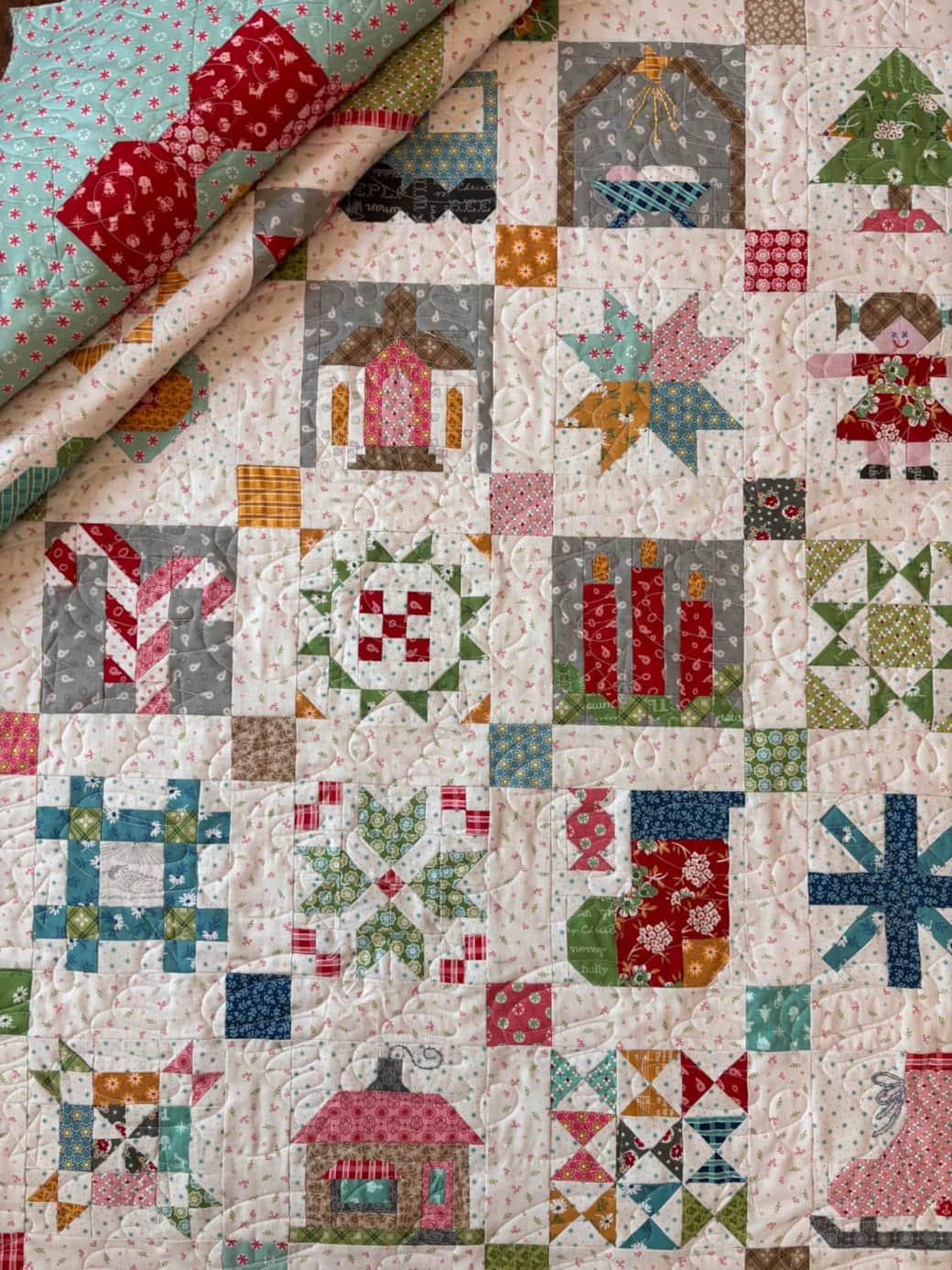
Sometimes you can see the quilting much more clearly on the back than you can on the front.
This is especially true when the front of the quilt is very busy.
A pantograph that disappears into the front might be much more noticeable on the backing fabric.
And I actually think that's part of the fun.
You can have quilting that is subtle on the front but really beautiful when you turn the quilt over and look at the back.
There Isn't Just One Right Answer
The nice thing about choosing a quilting design is that there isn't necessarily one right answer.
The same quilt could be quilted several different ways and look completely different.
You could choose something floral. You could use feathers or swirls. You could choose something geometric. You could use a loose design or something much denser.
And sometimes you just need to try a few ideas and see what works.
Look at your quilt. Look at the colors. Look at the piecing.
Think about whether you want the quilting to stand out or blend in.
Then choose something that complements what you've already made.
Because you've spent a lot of time choosing your fabrics and piecing your quilt. The quilting should help show off all of that work—not compete with it.
Need Some Time to Finish Your Quilt?
Of course, before you can choose the perfect quilting design, you have to finish the quilt top!
And if you're like me, sometimes that's easier said than done.
There are always more projects waiting, more fabric to cut and another quilt that sounds like fun.
Sometimes what you really need is a few uninterrupted days to sit down and sew.
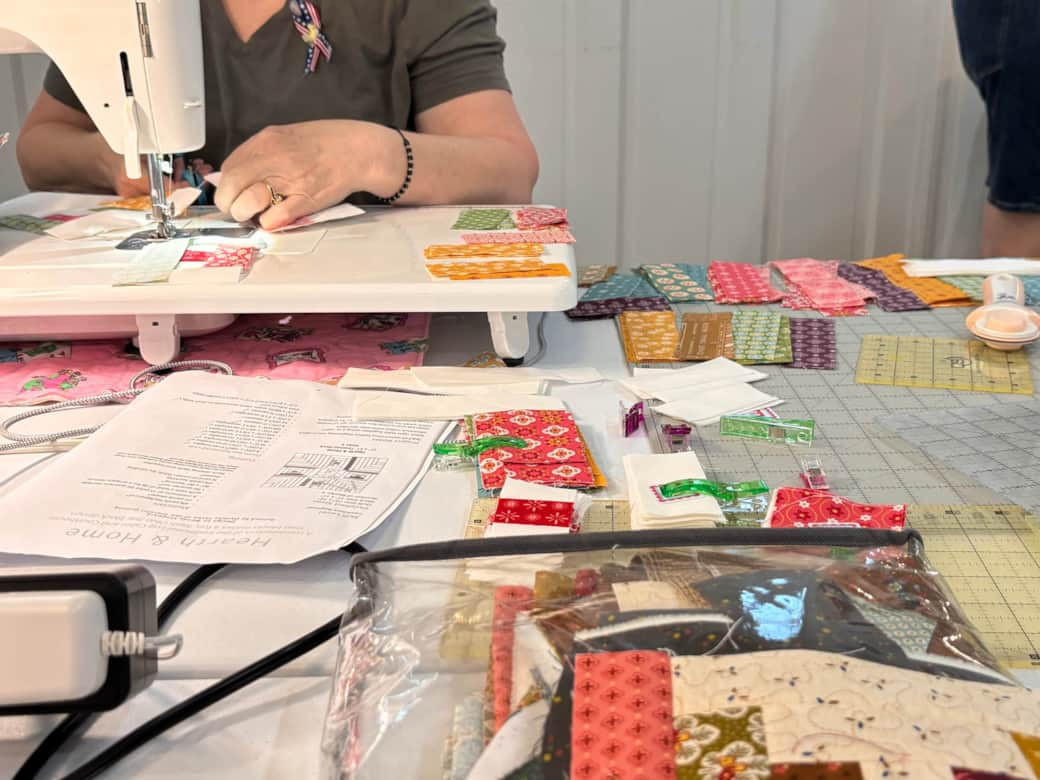
That's one of the things I love about a quilt retreat. You can bring your sewing machine, your fabric and the project you've been meaning to finish, and spend several days quilting with friends.
At Alverson House in Central Indiana, you can bring your quilting friends and enjoy a dedicated sewing space where you can work on your projects together.
Whether you're finishing a UFO, working on a new quilt or simply looking for some uninterrupted sewing time, a quilt retreat can be a wonderful way to make progress.
So pull out that quilt you've been working on, start thinking about how you want it quilted, and give yourself some time to sew.
Your quilt is worth finishing—and the right quilting design can be the perfect finishing touch.
KEEP IN TOUCH WITH THE ALVERSON HOUSE
Enjoy quilting inspiration and want to hear what's happening at the Alverson House? Stay connected and be the first to hear about retreat availability, special events, seasonal inspiration, and what's new at the Alverson House.